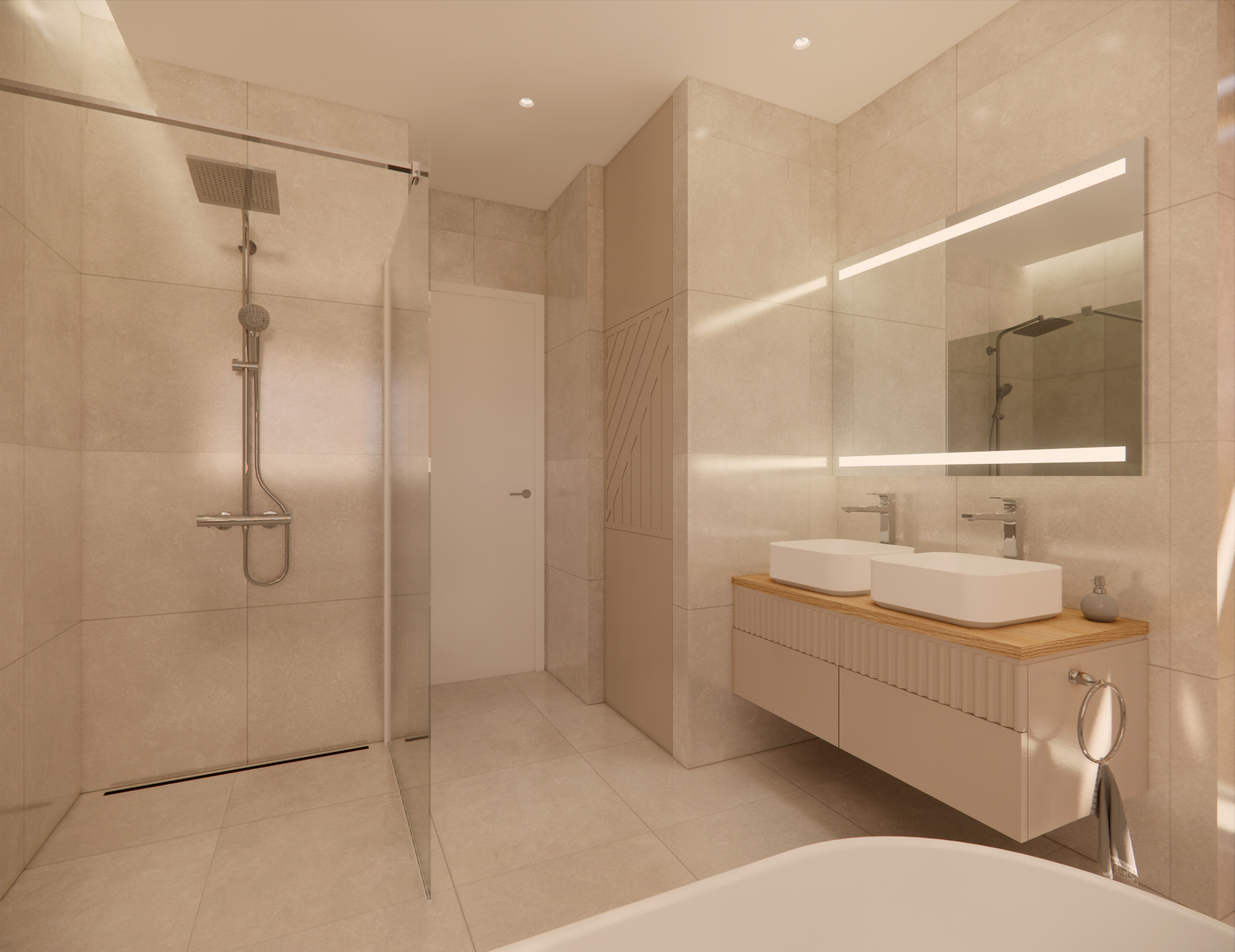



Architectural and interior design visual planning for professionals and developers
Visual design without execution documentation
based on quotation
Architectural and interior design visualization is an important tool of visual communication that aims to provide a realistic or stylized representation of the planned buildings, spaces, and interiors. Its purpose is to give designers, clients, and potential users a clear image of the future structure, its function, aesthetic characteristics, and its relationship with the environment.
Visualization is essential during the design process as it facilitates communication between designers and clients, allowing for a visual overview of the plans and simpler implementation of modifications. Additionally, it is an effective tool in sales and marketing, as designers and developers can effectively present projects to potential buyers, investors, or tenants with visual plans. Visualization plans also provide significant assistance to contractors, playing an important role in more accurate planning, understanding details, and avoiding mistakes. Last but not least, visualization plans make the design process experiential, allowing clients and users to experience the future experience before it is realized.